Refinish or Replace Hardwood Floors? An Atlanta Planning Guide
A worn wood floor does not automatically need to come out. It also does not automatically qualify for another sanding. The useful question is what can be preserved, what needs repair and which finish or replacement plan fits the floor you actually have.
Before comparing refinishing packages for a Metro Atlanta home, separate four different scopes: maintenance recoating, full sanding and refinishing, localized board repair and replacement. They solve different problems.
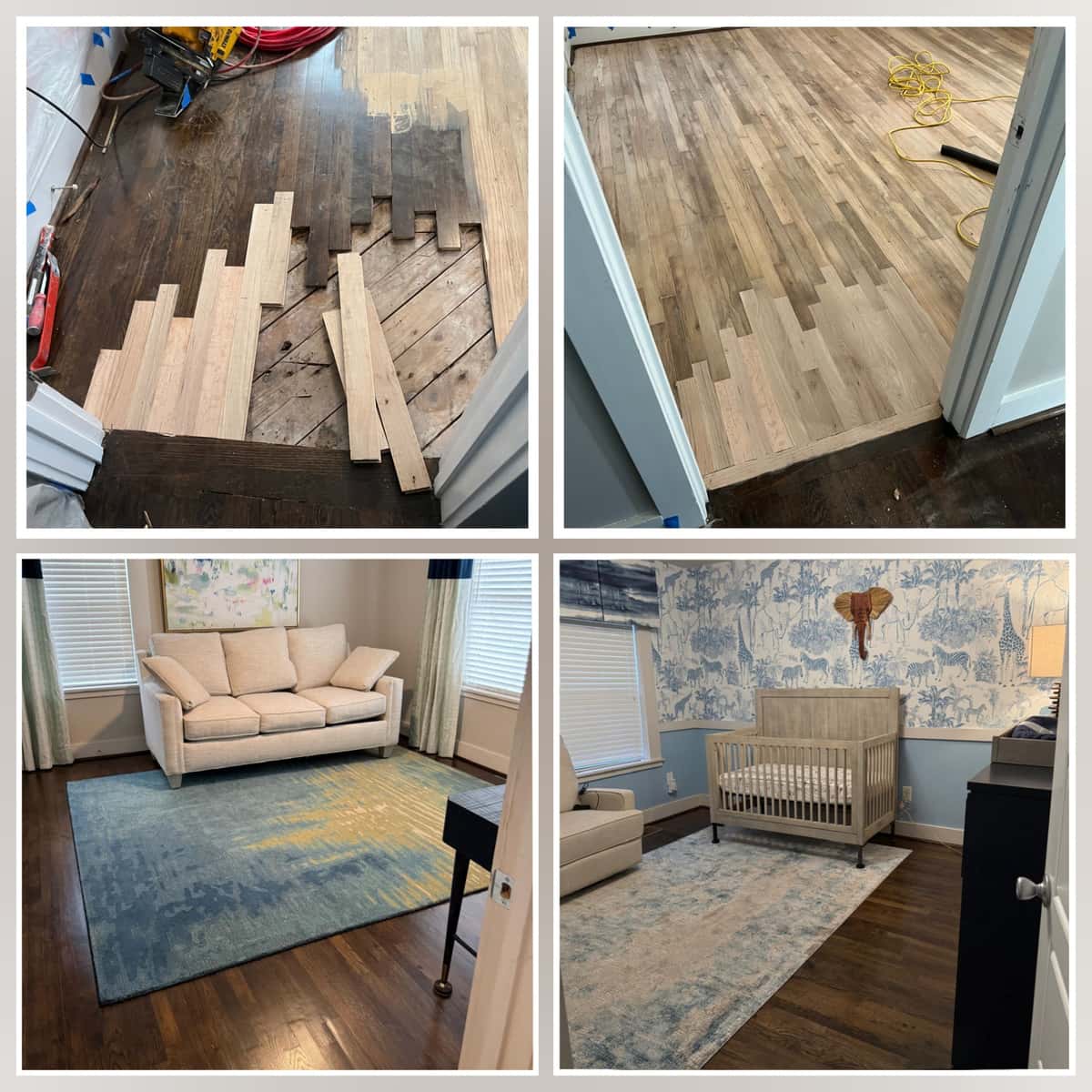
Recoat, refinish, repair or replace?
1. Maintenance recoat
A suitable existing finish may be cleaned, prepared and coated again to renew surface protection. A recoat is not the same as sanding back to bare wood. Ask whether the current finish and any past cleaning products are compatible with the proposed coating.
2. Full sanding and refinishing
Where enough usable wood remains, sanding can remove the old finish and prepare the surface for a new finish or color direction. Deep damage and bare worn areas deserve assessment. Sanding removes material, so the floor’s construction and history matter.
3. Localized repair plus finishing
One damaged section may call for board replacement or a patch before finish work. Ask how new and old boards will be blended and where the refinishing area will stop. A photograph cannot guarantee an invisible match.
4. Replacement
Replacement may make more sense where remaining wood, damage or the desired layout rules out restoration. Compare the complete removal and installation scope with the repair option, including transitions to flooring that will remain.
The National Wood Flooring Association’s refinishing guide distinguishes maintenance coats from resanding and explains why the number of possible sandings depends on the floor’s condition, thickness and other factors.
What to find out before choosing
Bring any spare boards, product labels or previous invoices to the assessment. These can help identify solid versus engineered construction and prior work. If that information is missing, say so rather than guessing.
- What is the floor? Identify construction, board dimensions and the existing surface where possible.
- What has already happened? Note previous sanding, coatings, repairs, leaks and cleaning products.
- What do you see now? Mark worn paths, scratches, stains, loose boards and changes in height.
- What do you want to change? Separate color and sheen preferences from problems with movement or damage.
Engineered wood has a real-wood surface, but its refinishable thickness varies. Ask for an assessment of the remaining usable wood rather than a promise based on the word “hardwood.” If replacement is on the table, compare material trade-offs in our hardwood-versus-LVP guide.
Use samples to settle the color conversation
A saved photo is a useful direction, but it is not a precise finish specification. Look at proposed samples on the actual wood and in the room’s daylight and evening light. Include repaired areas in the discussion because new and aged boards may respond differently.
Write down the approved color, sheen and finish system. If you want to keep the existing color, say that clearly too. Ask what the contractor expects to remain visible, particularly deep discoloration, old patches and board-to-board variation.
Compare the work, not the package name
“Basic,” “premium” and similar package names only help when the included work is clear. Build your comparison around these questions:
- Which rooms and stairs? Identify the included area, closets, landings and boundaries at adjoining rooms.
- Which repairs? Separate board replacement, subfloor work, squeaks and other preparation from the finishing price.
- Which process and products? Record recoat versus full sanding, stain if selected, and the specified finish system.
- Who handles the room? Agree on furniture, appliances, trim, cleanup and protection of adjoining spaces.
- How are surprises handled? Ask how concealed damage or a changed scope will be documented and approved.
If the floor feels soft, moves or has uneven sections, add a preparation assessment before focusing on finish choices. Our subfloor planning guide explains the questions to raise.
The last coat is not the whole schedule
Ask for separate guidance on light foot traffic, furniture, pets, cleaning and rugs. These can have different waiting periods. The selected finish instructions, site conditions and work sequence determine the plan, so a blanket completion promise is not enough.
Discuss how you will reach bedrooms, bathrooms and exits during the work, especially if stairs are included. Agree on ventilation and dust-control arrangements. If you have a move-in date or guests arriving, share it before booking and confirm the usable-room date in the written plan.
Protect the result with a simple care routine
Keep grit off the floor and wipe spills promptly. Choose cleaning products for the actual finish. The NWFA’s care guidance advises against wet and steam mopping wood floors. Ask for the final care instructions before furniture and rugs return.


Comments
Post a Comment
Join the conversation. Share your flooring question, experience, product insight or Metro Atlanta perspective. Keep comments helpful, relevant and respectful. For project estimates or service questions, visit FinalFloorsATL.com.