Hardwood vs. LVP in Atlanta: Compare Before You Choose
A convincing wood-grain sample can make hardwood and luxury vinyl plank look like close substitutes. Living with them reveals different trade-offs: how the floor feels, how damage is repaired, what the room can tolerate and what the installation needs underneath.
For a Metro Atlanta renovation, start with the room and the existing floor. Then compare exact products. “Hardwood” and “LVP” are broad categories, not complete specifications.
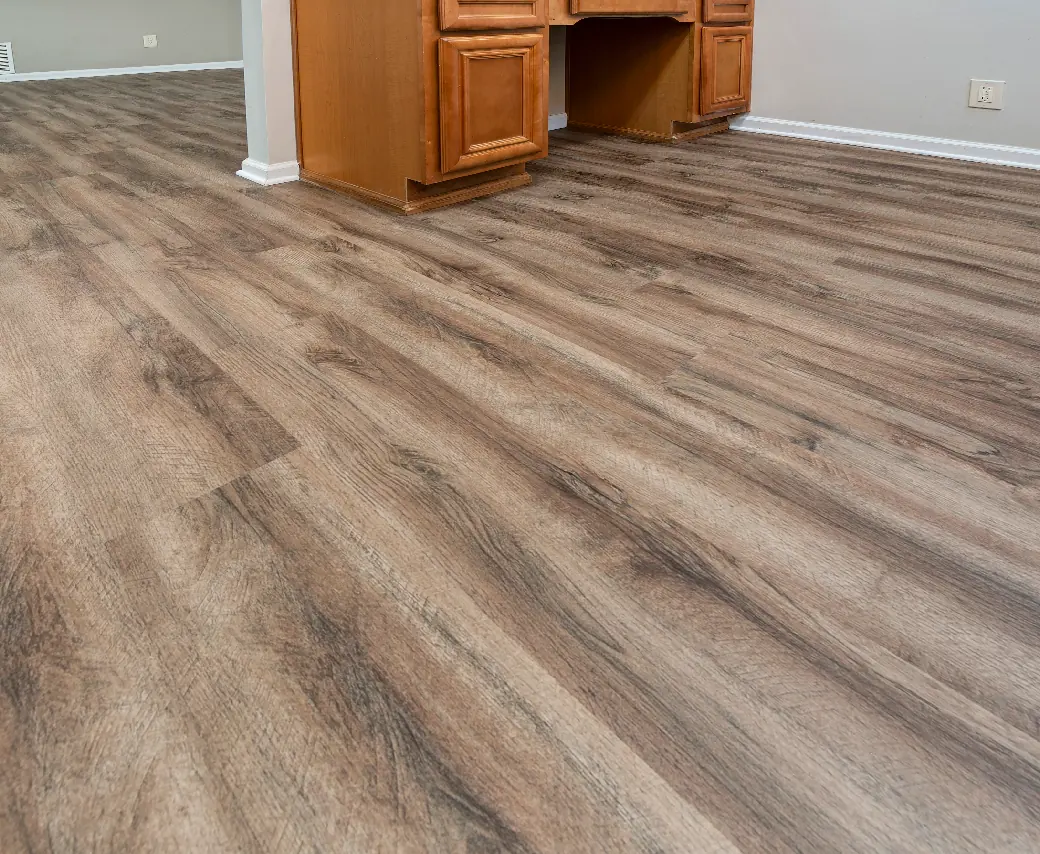
Start with the room, not a winner
Walk through the space and write down what happens there. Is it a busy entry, an upstairs bedroom, a rental living room or a lower-level room over concrete? Note pet traffic, rolling chairs, wet shoes, direct sunlight, changes in floor height and any history of leaks.
For upstairs rooms and condos, get the building’s written sound-control requirements before ordering. Ask for documentation for the complete flooring and underlayment system rather than assuming a thicker pad will solve sound transmission.
Hardwood vs. LVP: the useful differences
Real wood
Solid hardwood is wood through its thickness. Engineered hardwood uses a real-wood surface over layered construction. Both offer natural grain variation; their installation options and refinishing potential differ.
If keeping a real-wood surface matters to you, first check whether the existing floor can be restored. The NWFA’s wood-floor types guide explains the construction differences.
Luxury vinyl plank
LVP offers wood-look designs in different constructions and installation systems. Compare the exact product’s use rating, care instructions, warranty exclusions and repair process. A floating click product and a glue-down product can require different preparation and repairs.
Ask how a damaged plank would be replaced and whether you should retain matching spare material. Do not assume “pet-friendly” means scratch-proof.
Read beyond the thickness number
On LVP, total plank thickness and wear-layer thickness describe different parts of the product. Total thickness includes the construction beneath the surface. A wear-layer number describes the protective layer above the printed design. A mil is one-thousandth of an inch, not a millimeter.
Compare like with like. Record the brand, collection, SKU, installation method, wear layer, approved underlayment and residential or commercial use limits. One larger number does not settle the entire quality question.
On hardwood, ask what construction you are buying and what can actually be sanded later. Existing wear, previous sanding and remaining usable wood affect the answer. Engineered wood should never receive a blanket promise of future refinishing without checking its construction and condition.
Preparation can change the decision
A floor may be level overall yet have dips or ridges that fall outside a product’s flatness limits. Conversely, a sloped surface may be flat. The relevant question is whether the substrate meets the selected flooring system’s requirements.
Before deciding on either material, have soft spots, movement, high areas, low areas and moisture conditions assessed. Ask which repairs are included and how newly exposed conditions will be priced after removal. Our Blogger subfloor guide helps frame that conversation.
Think about care and the next repair
Make maintenance fit your household. For wood, the NWFA recommends removing grit, wiping spills promptly and using a cleaner suited to the finish rather than wet or steam mopping. For vinyl, follow the selected manufacturer’s care instructions and approved cleaner list.
Refinishing can be a reason to keep suitable hardwood, but it is an assessment, not a guarantee. If you already have wood, read our refinish-or-replace planning guide before comparing replacement samples.
What to put in your estimate request
- Room and goal: city, approximate area, current flooring and the result you want.
- Known conditions: concrete or wood substrate, prior leaks, movement, stairs and transition heights.
- Product details: exact selections or the two options you want compared.
- Complete scope: removal, disposal, preparation, installation, trim, transitions and furniture handling.
- Use and access: occupied rooms, pets, building rules and the needed sequence of work.
Compare the same scope on both estimates. A lower material price can be offset by preparation, repairs or access needs. Leave space for a site assessment instead of treating an online square-foot figure as a final quote.


Comments
Post a Comment
Join the conversation. Share your flooring question, experience, product insight or Metro Atlanta perspective. Keep comments helpful, relevant and respectful. For project estimates or service questions, visit FinalFloorsATL.com.