Uneven Floors in Atlanta: What to Check Before New Flooring
A new floor can look beautiful in the sample rack and still disappoint if the surface underneath has not been assessed. When a room feels uneven, soft or noisy, start by describing the symptom before choosing a plank or asking for “leveling.”
For Atlanta-area flooring projects, a useful preparation plan identifies the existing substrate, the condition causing concern and the requirements of the exact floor being installed. This guide helps you prepare for that conversation.
Flat does not always mean level
Level describes a surface relative to horizontal. Flatness describes changes in the surface over a distance. A floor can slope consistently and still be flat; a generally level room can contain a low spot or a raised seam.
That distinction matters because flooring instructions set limits for the substrate. Ask which requirement applies to the selected product and how the installer will check it. Avoid approving a promise that the room will be “perfectly level” when the actual scope is localized preparation for a new floor.
What does the floor actually do?
A dip or raised area
Note where the change appears, whether it continues through adjoining rooms and whether a previous patch or transition is visible. Ask how the area will be measured and what preparation is proposed for the selected floor.
A soft or moving spot
Point out exactly where the surface moves underfoot. Do not assume a thicker plank will solve the cause. The condition needs assessment before a finish-floor preparation method is chosen.
Squeaks or clicking
Describe when the sound happens and what flooring is there now. Noise alone does not identify the cause. Ask what can be inspected before removal and what may only become clear after the existing floor comes up.
Staining or past leaks
Share the leak history, repairs and drying records if available. A dry-looking surface does not establish readiness for every flooring system. Moisture checks and any required treatment belong in the plan.
If a floor appears unsafe, has substantial movement or raises structural concerns, keep people off the affected area and arrange qualified assessment. Flooring patching or a new covering should not substitute for resolving a structural problem.
Wood and concrete need different conversations
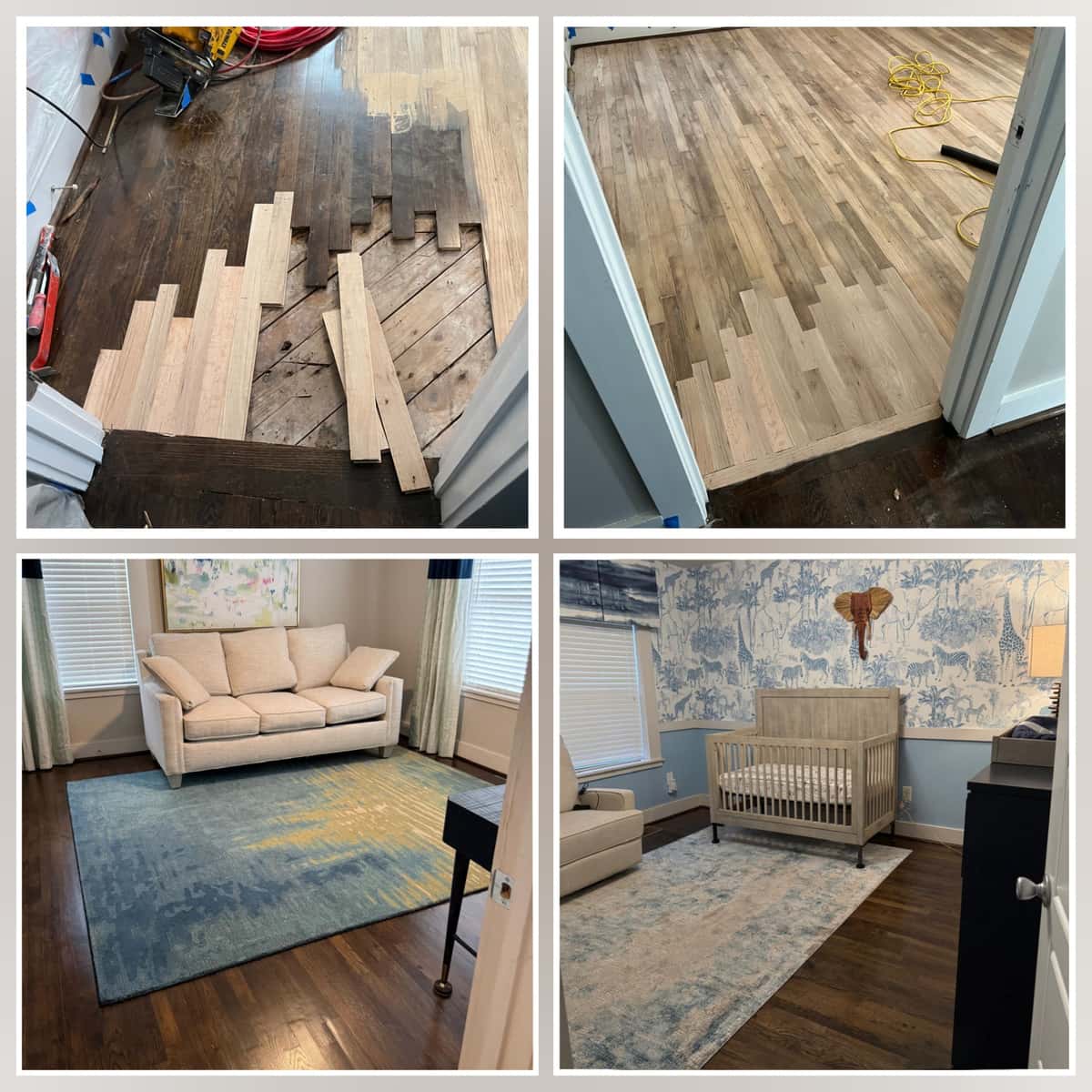
For a wood substrate, ask about panel condition, movement and any damaged areas revealed during removal. For concrete, ask about the surface condition, existing adhesive, cracks or joints and the checks required by the proposed flooring system.
Do not start grinding, scraping or removing unidentified older flooring or adhesive yourself. Ask the project professional whether material testing or another specialist is needed before disturbance. Likewise, a coating or patch should not be selected merely because it is called a “leveler.” Compatibility and site conditions matter.
What a useful preparation scope includes
- The problem area: rooms, approximate locations and the condition being addressed.
- The flooring system: exact product or approved specification, installation method and relevant substrate requirements.
- The proposed work: removal, localized repairs, surface preparation, compatible patching or other specified treatment.
- The boundaries: what is included, what remains unknown and what requires a separate qualified assessment.
- The finished connections: doors, stairs, transitions, appliances and adjoining floor heights.
- The approval process: how concealed conditions and added work will be documented before proceeding.
Take photos of the room and mark the areas you are concerned about. Include the property city, current surface and intended replacement material in the request. An approximate area is helpful for planning, but the site assessment establishes the work.
Readiness is a checkpoint, not a calendar guess
Ask what needs to be verified before the finish flooring covers the substrate. Depending on the system, that may include completed repairs, the specified surface condition, moisture results and product-specific waiting periods for preparation materials.
Do not equate “dry to the touch” with approved for installation. Ask who records the checks and which current instructions govern the next step. If the floor is part of a water-loss repair, confirm source control and required mitigation, drying and remediation are complete before flooring putback.
Compare the whole job
A quote that includes preparation and a quote that assumes a ready substrate are not directly comparable. Ask both contractors to identify their assumptions and the process for additional findings. This is more useful than trying to choose from a universal leveling price or a broad promotional allowance.
Still selecting the finish floor? Read our hardwood-versus-LVP comparison. Keeping existing wood? Our refinish-or-replace guide explains how repair and finish work fit together.


Comments
Post a Comment
Join the conversation. Share your flooring question, experience, product insight or Metro Atlanta perspective. Keep comments helpful, relevant and respectful. For project estimates or service questions, visit FinalFloorsATL.com.